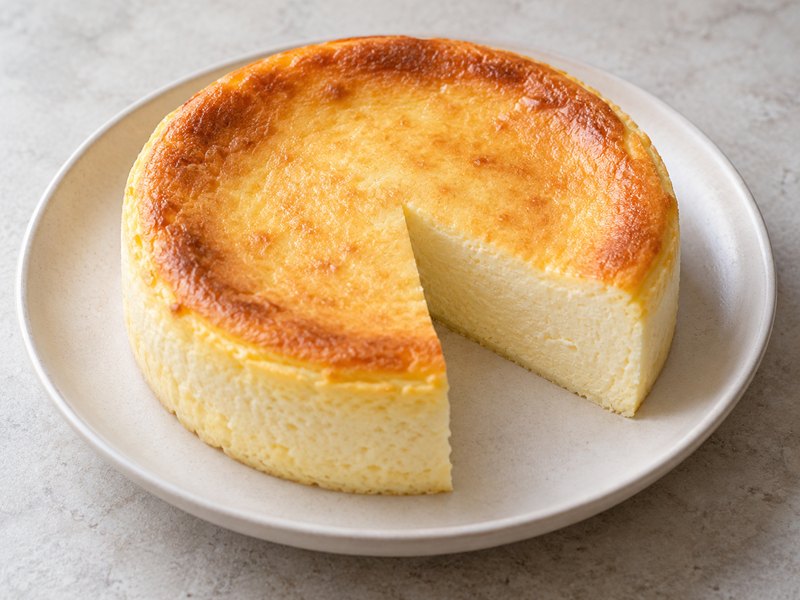
German Quark Cheesecake
Käsekuchen without cake base bakes a delicate and slightly sour cake with quark and cream cheese.
- Total time
- 285 minutes
- Servings
- 6 servings
- Flavor
- Sweet
- Equipment
- Oven, 18 cm round mold, egg beater
Per serving, approx. 240 kcal
Key ingredients: Quark cheese Cream cheese Eggs
Edited and maintained by Pantry & Plate
Dessert · Updated
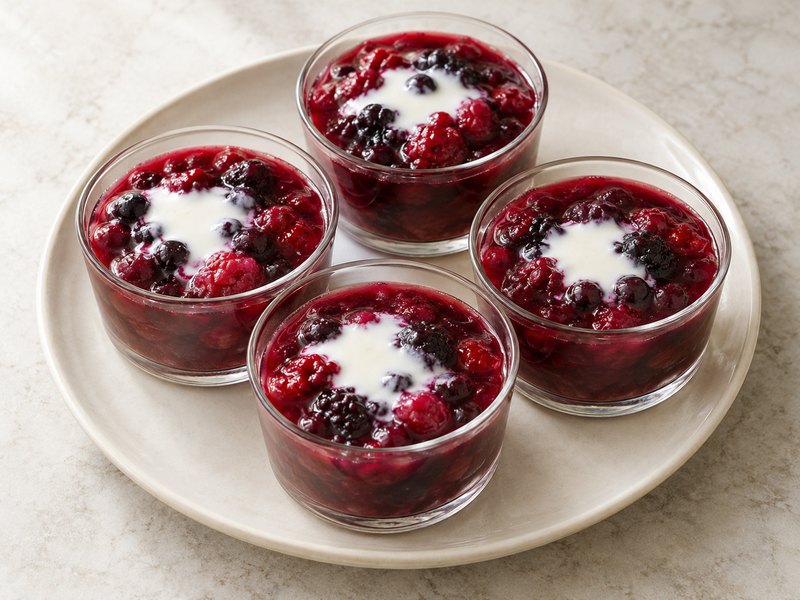
AI-generated dish illustration. Read our editorial notes.
Estimated protein per serving: 11.1 g.
Prepare the ingredients
Ingredients for 6 servings. Quantities scale with your serving count.
| Food ingredients | Dosage |
|---|---|
| Quark cheese | (400 g) |
| Cream cheese | (100 g) |
| Eggs | (3 pcs) |
| Sugar | (85 g) |
| Cornstarch | (30 g) |
| Butter | (20 g) |
| Vanilla extract | (4 ml) |
| Lemon zest | (2 g) |
| Salt | (0.5 g) |
The amount of ingredients, step brackets and calories are adjusted according to the number of people; the cooking time is based on the basic 6 person portion. Please cook in batches for multiple people.
When there are decimals when measuring by "piece", it can be divided by weight; eggs are based on about 50 grams of shelled beaten eggs for reference. Dishes that need to be formed whole can be prepared in basic portions and divided into meals. The molding quantities and molds in the steps are based on the basic portion. When the number of people increases or decreases, the molding quantities will be adjusted accordingly or made in batches.
Calorie details and calculation basis
The whole dish takes approx. 1450 kcal · Approximately 240 kcal per person
| Quark cheese | 288 kilocalories |
| Cream cheese | 350 kilocalories |
| Eggs | 215 kilocalories |
| Sugar | 329 kilocalories |
| Cornstarch | 114 kilocalories |
| Butter | 143 kilocalories |
| Vanilla extract | 12 kilocalories |
| Lemon zest | 1 kilocalories |
| Salt | 0 kilocalories |
Estimated based on the edible weight of the ingredients and the listed oils, sugars, and sauces, without deducting remaining oil, discarded soup, or alcohol evaporation. Data reference USDA SR28and the food material reference data on this site, some are approximate values for similar food materials. The brand and actual serving size affect the results and are not actual measured values.
How to make German Quark Cheesecake
Instructions for 6 servings. Add each ingredient once unless a step specifies a divided amount. Cooking times are estimates; adjust for doneness and batch size.
Take quark cheese
Take quark cheese (400 grams), cream cheese (100 grams) and eggs (3 pieces) from the refrigerator and let them warm for 20 minutes; line a 18 cm mold with baking paper and preheat the oven to 160 °C.
Melt the butter in a bowl set over hot water
Melt the butter (20 g) in a bowl set over hot water, then cool until just warm. Mix the two cheeses with the sugar (85 g) and salt (0.5 g) until smooth. Add the eggs (3) one at a time, mixing each in before adding the next.
Add the starch, melted butter, vanilla extract
Add the starch (30 g), melted butter (20 g), vanilla extract (4 ml), and lemon zest (2 g) to the cheese mixture containing the beaten eggs (3). Gently combine with a hand whisk, pour into the prepared pan, and tap the pan lightly twice.
Bake the filling until set
Bake on a lower-middle oven rack for 50–55 minutes, until the edges are set and the center has only a slight wobble and reaches 74°C. Turn off the oven, leave the door slightly ajar, and let the cake cool slowly inside for 20 minutes.
Remove from the oven and cool
Remove from the oven and cool for another 45 minutes. Cover and refrigerate for 2 hours to set, then unmold and cut into 6 pieces with a warmed, dry knife.
Cooking tips
- Do not beat too much air into the beaten eggs. The cake will be less likely to rise and then collapse; slight shrinkage is normal.
- Preheat the oven according to the steps first; the position of the baking pan, the thickness of the ingredients and the actual temperature of the equipment will affect the cooking time. Please judge the doneness based on the steps.
- The amount of evaporation from pots is different from the amount of water absorbed by the food. Pay attention to the amount of water when cooking; the water used for cleaning and blanching should be sufficient to handle the food.
Find a video and follow along
Jump to the platform to search for a tutorial with the same name. The video version and ingredients may be different.
If you have allergies or dietary restrictions, please check the packaging of all ingredients and sauces and pay attention to cross-contact. Handle raw and cooked ingredients separately.