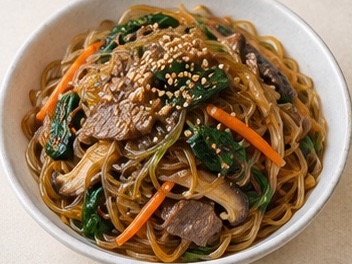
Japchae (Korean Beef and Glass Noodles)
Chewy sweet potato glass noodles tossed with beef and colorful vegetables.
- Total time
- 35 minutes
- Servings
- 2 servings
- Flavor
- Salty & savory
- Equipment
- Wok
Per serving, approx. 580 kcal
Key ingredients: Sweet potato glass noodles Beef Spinach
Edited and maintained by Pantry & Plate
Main course · Updated
AI-generated dish illustration. Read our editorial notes.
Estimated protein per serving: 18.8 g.
Prepare the ingredients
Ingredients for 2 servings. Quantities scale with your serving count.
| Food ingredients | Dosage |
|---|---|
| Sweet potato glass noodles | (150 g) |
| Beef | (150 g) |
| Spinach | (100 g) |
| Carrots | (1 pc) |
| Onions | (0.5 pcs) |
| Soy sauce | (25 ml) |
| Sugar | (8 g) |
| Sesame oil | (10 ml) |
| Cooking oil | (15 ml) |
| Toasted white sesame seeds | (3 g) |
The amount of ingredients, step brackets and calories are adjusted according to the number of people; the cooking time is based on the basic 2 person portion. Please cook in batches for multiple people.
When there are decimals when measuring by "piece", it can be divided by weight; eggs are based on about 50 grams of shelled beaten eggs for reference. Dishes that need to be formed whole can be prepared in basic portions and divided into meals. The molding quantities and molds in the steps are based on the basic portion. When the number of people increases or decreases, the molding quantities will be adjusted accordingly or made in batches.
Calorie details and calculation basis
The whole dish takes approx. 1165 kcal · Approximately 580 kcal per person
| Sweet potato glass noodles | 527 kilocalories |
| Beef | 302 kilocalories |
| Spinach | 23 kilocalories |
| Carrots | 25 kilocalories |
| Onions | 22 kilocalories |
| Soy sauce | 15 kilocalories |
| Sugar | 31 kilocalories |
| Sesame oil | 81 kilocalories |
| Cooking oil | 122 kilocalories |
| Toasted white sesame seeds | 17 kilocalories |
Estimated based on the edible weight of the ingredients and the listed oils, sugars, and sauces, without deducting remaining oil, discarded soup, or alcohol evaporation. Data reference USDA SR28and the food material reference data on this site, some are approximate values for similar food materials. The brand and actual serving size affect the results and are not actual measured values.
How to make Japchae (Korean Beef and Glass Noodles)
Instructions for 2 servings. Add each ingredient once unless a step specifies a divided amount. Cooking times are estimates; adjust for doneness and batch size.
Cook the sweet potato glass noodles
Cook the sweet potato glass noodles (150 g) according to the package directions and drain. Cut the beef (150 g), carrot (1) and onion (0.5) into thin strips. Blanch the spinach (100 g) until cooked. The noodles (150 g total) usually take 6–8 minutes and the spinach (100 g total) about 1–2 minutes.
Heat the oil
Heat the oil (15 ml), stir-fry the beef (150 g) until cooked, then set aside. Cook the carrot (1) and onion (0.5) in the same pan. Allow about 3–5 minutes for the beef strips (150 g total) and about 3 minutes for the vegetables.
Return the beef to the pan
Return the beef (150 g) to the pan. Add the cooked sweet potato glass noodles (150 g), spinach (100 g), soy sauce (25 ml) and sugar (8 g). Sprinkle in a little water and toss well.
Turn off the heat and stir in sesame oil
Once everything is heated through, turn off the heat and stir in sesame oil (10 ml).
Sprinkle with toasted sesame seeds
Have the toasted white sesame seeds (3 g) ready. Sprinkle over the finished dish and serve.
Cooking tips
- Glass noodles absorb sauce quickly. Combine everything at the end and avoid prolonged stir-frying, which can make the noodles clump.
- Prepare all the ingredients that need to be cut and mixed before starting the fire; it is recommended to cook in batches for multiple people to avoid overfilling the pot and causing a large amount of water.
- The sauce or stock itself may contain salt. Mix it according to the steps first, and then adjust the salt amount based on the saltiness of the selected product.
Find a video and follow along
Jump to the platform to search for a tutorial with the same name. The video version and ingredients may be different.
If you have allergies or dietary restrictions, please check the packaging of all ingredients and sauces and pay attention to cross-contact. Handle raw and cooked ingredients separately.